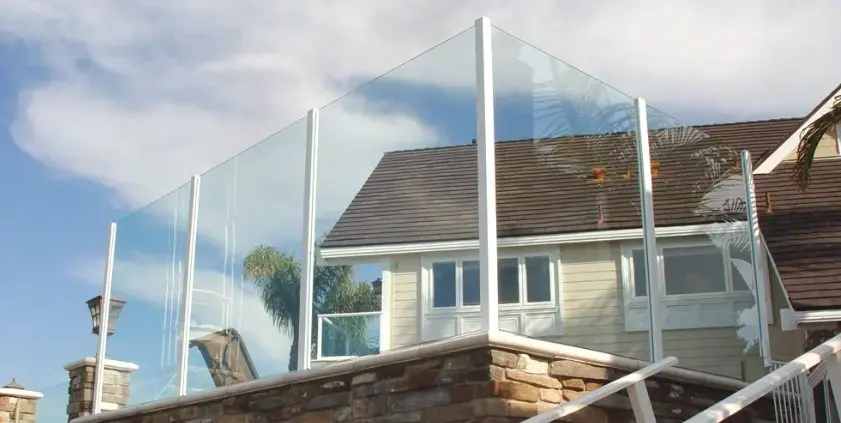
Feature | Semi-Frameless | Frameless |
Support | Vertical posts between panels | Base-mounted spigots only |
Cost | More affordable | Higher |
Look | Modern with subtle posts | Completely seamless |
Structural strength | Very strong | Strong, relies on thicker glass |
Installation complexity | Straightforward | More involved |
The honest answer is that most homeowners who go frameless do it purely for the aesthetic — there are no visible posts and the glass run looks completely uninterrupted. Semi-frameless delivers 90% of that look at a noticeably lower cost. For most residential pools, it is the smarter choice financially without feeling like a compromise visually.
To see the full range of pool fencing solutions available, visit the pool fencing Gold Coast page.
Why Homeowners Choose Semi-Frameless Glass Pool Fencing
It costs less without looking cheaper. The saving of 20–30% over frameless is real, and most visitors to your property genuinely cannot tell the difference from a normal viewing distance.
The posts add genuine structural strength. If your property is in a coastal area or exposed to strong winds, the vertical posts are actually a practical advantage. They distribute load across the fence more evenly and reduce stress on individual glass panels over time.
Visibility stays completely clear. You can see the pool from inside the house, from the deck, from anywhere in the backyard. This matters for child supervision and it is one of the main reasons people choose glass fencing over timber or aluminium in the first place.
It meets Australian compliance requirements. When installed correctly by a licensed professional, semi-frameless glass pool fencing satisfies all the relevant Australian pool safety standards. Understanding what those standards mean for your specific property is important — particularly on the Gold Coast where local council rules apply on top of the national requirements. This guide on how pool fencing laws on the Gold Coast affect homeowners is worth reading before you finalise anything.
Installation: What the Process Actually Looks Like
Professional installation is the right call for most properties. Straightforward DIY installs on flat concrete are possible, but anything involving decking, uneven ground or corner configurations really does need someone who knows what they are doing — both for structural reasons and because an incorrectly installed fence will fail a compliance inspection.
Site assessment and measuring comes first. The full fence line is measured, surface type is confirmed, gate positions are decided and any compliance requirements specific to your state are checked against the site conditions.
Post positions are marked and drilled. For concrete, posts are core-drilled and anchored with bolts or chemical anchors. For timber decking, surface-mount or through-bolt fixings are used depending on the deck structure. Getting posts perfectly vertical at this stage is critical — any lean affects the whole fence run.
Glass panels are fitted. Each toughened panel is slid into the post channels and held with rubber gaskets, which cushion the glass against direct metal contact and keep panels rattle-free.
The gate is installed and tested. The gate must self-close and self-latch automatically, with the latch on the pool side and out of reach of children. This is a legal requirement, not optional.
Final inspection. A licensed pool inspector certifies the fence meets all required standards before the pool can legally be used. Skipping this step creates real liability issues if anything goes wrong.
Most standard residential installations are done within one to two days.
One thing worth noting — always use a licensed, insured installer. It protects you legally and guarantees the work meets compliance standards. Here is a useful read on why licensing and insurance matter in pool fencing.
How It Holds Up in Australian Conditions
Coastal environments are the main challenge. Salt air accelerates corrosion on metal fittings, so marine-grade stainless steel posts and fittings are worth the extra cost if you are within a few kilometres of the coast. Rinsing posts with fresh water regularly also makes a meaningful difference to longevity.
UV exposure affects rubber gaskets and seals faster in Australia than in cooler climates. Checking seals once a year and replacing anything that looks cracked or brittle keeps panels secure and eliminates any movement or rattling.
Wind loads are managed well by the post structure. The posts distribute wind force across the fence line rather than concentrating it on individual glass panels, which is one practical advantage semi-frameless has over frameless in exposed locations.
What Does Semi-Frameless Glass Pool Fencing Cost in Australia?
Component | Estimated Cost |
Glass panels | $200 – $350 per panel |
Posts and fittings | $50 – $150 per post |
Professional installation | $100 – $200 per linear metre |
Compliant gate | $300 – $600 per gate |
Pool compliance inspection | $150 – $300 |
For a typical residential pool — around 20 to 25 linear metres of fencing — total installed costs usually land somewhere between $4,000 and $8,500, depending on materials, surface type and site complexity.
Glass thickness, post material, the number of gates and how accessible your site is all affect the final number. Stainless steel posts cost more than powder-coated aluminium. A 12mm glass panel costs more than an 8mm one. Getting a detailed written quote from your installer before any work starts is the only way to know exactly what you are working with.
Compliance: What Australian Law Requires
Pool fencing is mandatory in Australia and requirements are enforced. The national minimum standards include a fence height of at least 1,200mm from finished ground level, non-climbable zones of 900mm on the outside of the fence, self-closing and self-latching gates with latches on the pool side, and no ground-level gaps greater than 100mm.
State requirements add further specifics — Queensland, for example, has particular rules around climbable objects near pool fences. Always confirm what applies to your specific location with your local council or a licensed pool inspector.
The Australian Building Codes Board sets the national framework, and the Royal Life Saving Society Australia consistently highlights compliant pool barriers as one of the most effective measures for preventing child drowning in residential settings.
Non-compliance can result in fines and, more importantly, leaves you legally exposed if an accident occurs.
Conclusion
Semi-frameless glass pool fencing hits a good balance between cost, strength and appearance that most other pool fencing types simply do not match. You get a proper glass fence — clear, modern, compliant — without paying the premium that fully frameless commands.
If you are planning a pool fencing project on the Gold Coast or nearby areas, get in touch with Total Vision Pool Fencing for a free quote. The team can walk you through what suits your property and give you an honest assessment of costs and options before any commitment is made.
Frequently Asked Questions
What is the difference between semi-frameless and frameless glass pool fencing?
Semi-frameless uses vertical posts between panels for support. Frameless uses only base-mounted spigots with no above-ground posts. Frameless costs more and looks more seamless. Semi-frameless is more affordable and still looks excellent.
Is semi-frameless glass pool fencing safe and compliant?
Yes, when installed correctly by a licensed professional it meets all Australian pool safety standards including height, gate and non-climbable zone requirements.
How thick is the glass?
Most systems use 8mm to 12mm toughened safety glass. Thicker panels are recommended for longer spans or windier locations.
How much does it cost per metre in Australia?
Professional installation typically runs $100 to $200 per linear metre. Total project cost for an average residential pool is usually $4,000 to $8,500.
Can it be installed on timber decking?
Yes. Surface-mount or through-bolt fixings are used depending on the deck construction. The deck structure should be assessed for load capacity before installation.
Does glass pool fencing add property value?
Generally yes. Glass fencing is well regarded in the Australian property market and contributes positively to street appeal, particularly in coastal and suburban areas.
What happens if the fence fails inspection?
You will need to fix the non-compliant elements before the pool can legally be used. Ongoing non-compliance risks fines.
How long does it last?
15 to 20 years with quality materials and basic maintenance. Glass panels rarely need replacing — hardware and seals are what age first.